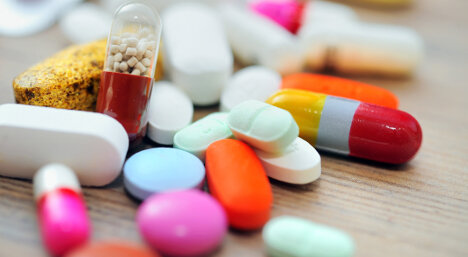
ANTIBIOTIC RESISTANCE ALARM By Dr. Salvina Puglisi (Specialist in Respiratory Diseases) The first half of the 20th century marked one of the most important moments in the history of medicine; Fleming's intuition and subsequent discoveries completely revolutionized the treatment of bacterial infections, significantly reducing mortality and changing quality of life. However, alongside the enthusiasm for these discoveries, evidence soon emerged of a partial insensitivity to the molecules, called antibiotic resistance, which is the ability of a pathogen to resist an antimicrobial drug. In particular, two types of resistance are known: a natural one, typical of some pathogens such as mycoplasmas, and an acquired one, by far the most represented especially today, determined by the continuous contact of the pathogen with the antibiotic molecule. The bacterium develops resistance by obeying natural laws of species selection, therefore survival is guaranteed by those germs that, even in disadvantageous conditions, develop a particular strength of replication. Every year in Europe 33,000 people die due to the ineffectiveness of antimicrobials against bacterial infections and over 10,000, more than a third, are Italians. The latest Ar-ISS surveillance report in Italy (five-year period 2012-2016) documented a significant increase in resistance, which is particularly critical especially for pathogens such as Gram-negatives, for which the number of effective molecules is decidedly lower. The case of Klebsiella P., for example, is emblematic: resistance to carbapenems in Italy is far higher than the European standard average (30% versus 6.5%). The numbers are truly discouraging; investigations conducted by AIFA, in a recent report for the year 2017, document a higher consumption of antibiotics especially in the extreme age groups (under 4 and over 75 years) and in southern Italy and the islands, although in these same geographical areas the control strategies implemented have already produced the first positive results. The greatest divergence in percentage terms of antibiotic resistance between our nation and the rest of Europe concerns in particular fluorquinolones, an antibiotic class of great therapeutic relevance but also at frequent risk of adverse events especially in the elderly, and macrolides, drugs widely used in the community and also in pediatrics. Hospital consumption, on the other hand, remains aligned with the European standard. In pediatrics, moreover, the consumption of amoxicillin/clavulanate is oversized to the detriment of the single molecule amoxicillin which, according to guidelines, although having a selective spectrum of action, could be used in frequent streptococcal pharyngotonsillitis where it is the first-choice antibiotic. Finally, another cause of antibiotic resistance is the use of low doses of antibiotics in mass animal farming to prevent the spread of diseases; this naturally favors the development of resistant pathogens in the intestinal environment which, if not eradicated by adequate treatment and cooking of the meat, are easily transferred to humans. In this rather unpromising scenario, the advance of so-called SUPERBUGS could have a devastating impact on mortality; it is estimated that by 2050 the phenomenon of antibiotic resistance will be the leading cause of death. The development of new molecules is still far off, therefore it is necessary to act quickly and more widely in the territory, raise awareness and inform the population, discourage self-medication and adopt stricter strategies for therapeutic appropriateness. Disseminating some apparently trivial but effective rules could be one of the starting points to reduce the resistance phenomenon: - timing and methods of intake are fundamental: never stop antibiotic therapy early and never reduce doses, unless advised by a doctor - never change the molecule except on medical advice: the spectrum of action is different for the various classes of antibiotics - antibiotics should only be used for bacterial infections, therefore the prescription must be exclusively by the doctor

POLISPECIALISTICO CARSIL
Corso Italia, 42 Riposto (CT)
© POLSPECIALISTICO CARSIL 2020
blog-detail 


impronta-digitale,
DIGITAL DENTAL IMPRESSION: HOW IT WORKS
2024-01-06 17:58
2024-01-06 17:58
An intraoral scanner is used: a device that uses a special camera and a light source to create three-dimensional models...

ODONTOSTOMATOLOGY, dentale-digitale,
DIGITAL DENTAL IMPRESSION...NEW OPPORTUNITY?
2024-01-06 17:50
2024-01-06 17:50
The first question that naturally arises is: "why use something digital?". The answer is the same one you would give if you asked yourself why ut

Medicine,
Antibiotic Resistance Alarm
2019-05-09 07:04
2019-05-09 07:04
The term antibiotic resistance refers to the ability of a bacterium to resist an antibiotic drug. The introduction into therapy of the clas

ODONTOSTOMATOLOGY,
What are the main damages caused by smoking?
2018-06-24 15:08
2018-06-24 15:08
Smoking has a strong negative impact on health, so much so that it is considered the leading cause of preventable death in industrialized countries. Remembering that the mouth

SLEEP DISORDERS,
Obstructive Sleep Apnea Syndrome (OSAS)
2018-06-24 14:51
2018-06-24 14:51

Antibiotic Resistance Alarm
Antibiotic Resistance Alarm
2019-05-09 07:04
2019-05-09 07:04
Array() no author 93027
Medicine,