POLISPECIALISTICO CARSIL
Corso Italia, 42 Riposto (CT)
© POLSPECIALISTICO CARSIL 2020

ORAL HYGIENE
Good home oral hygiene is the simplest and most effective way to prevent cavities, gum bleeding, bad breath and, therefore, complex and costly dental treatments.
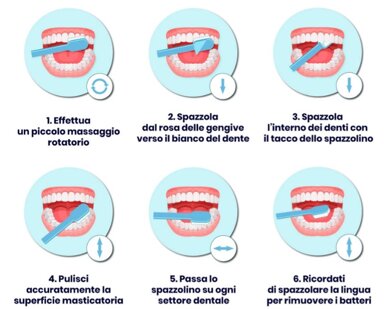
Every day it is essential to brush your teeth at least three times (breakfast, lunch and dinner), preferably 15–20 minutes after eating (to avoid wearing the enamel surface which, right after meals, is in a strongly acidic environment stimulated by chewing and the start of food digestion), with a toothbrush and fluoride toothpaste, focusing on all tooth surfaces, the chewing, inner and
outer ones, as well as the gum, massaging it.
The toothbrush technique is as simple as it is intuitive: you should make circular movements, from the gum margin downward, to avoid “dragging dirt” right toward the gum, where bacteria could settle and find an ideal habitat to build up and multiply.
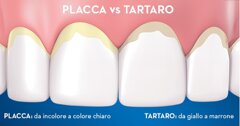
It should be specified, however, that home oral hygiene is indeed useful, but it removes what is called dental biofilm, also known as dental plaque. Dental biofilm originates from a salivary substrate (called the salivary pellicle) that deposits on the freshly cleaned enamel surface, just a few minutes after brushing. On this surface made exclusively of salivary proteins, and free of bacteria, different types of bacteria will begin to deposit following a very precise pattern, forming a polymicrobial aggregate: dental biofilm.
Only if dental plaque is not removed, the minerals present in saliva will tend to deposit and precipitate into organic crystals, turning plaque into tartar.
L’use of the toothbrush, unfortunately, is not sufficient for removing plaque. Some areas of the tooth, in fact, remain inaccessible to it, risking persistence and causing tartar buildup and cavities precisely in the areas between one tooth and another. Tools such as the interdental brush and dental floss are intended for cleaning these areas.
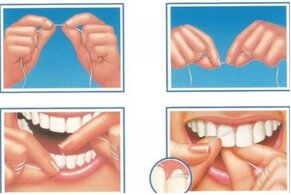
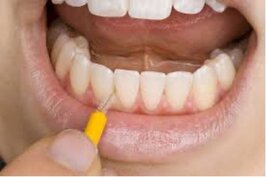
These are two seemingly similar tools, but with different functions and uses. Dental floss is intended for cleaning contact points. It should be used by applying light pressure toward the other tooth and with “zig-zag movements” to facilitate inserting the floss into the contact point, without risking a strong snap-back and therefore excessively traumatizing the gum. Once inserted, the floss should be gently guided toward the apex following the curvature of the tooth surface. The interdental brush, instead, allows cleansing of the areas
below the contact points and should be used by inserting it horizontally into the space, to push plaque out of the interdental space. With both tools, the combined use of a small dab of fluoride toothpaste is recommended, to remineralize any areas demineralized by bacterial action.
Giovanni Cavallaro